The other trip I’ve taken outside of Prague since my arrival was to Kutna Hora, a UNESCO-protected Heritage site.
Kutna Hora mainly came to fame in the 13th century because it was close to the site of some very prolific silver mines; it remained one of the richest cities in Bohemia until the mines finally petered out in the 18th century.
Sites in Kutna Hora include the Cathedral of St. Barbara (the patron saint of miners):
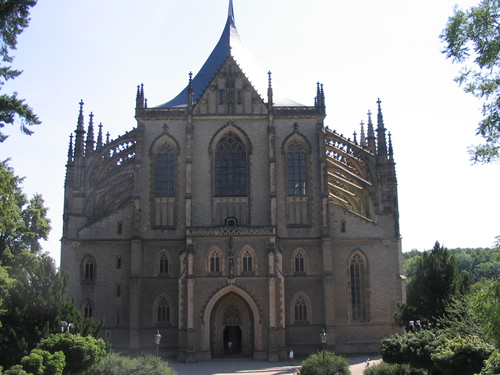
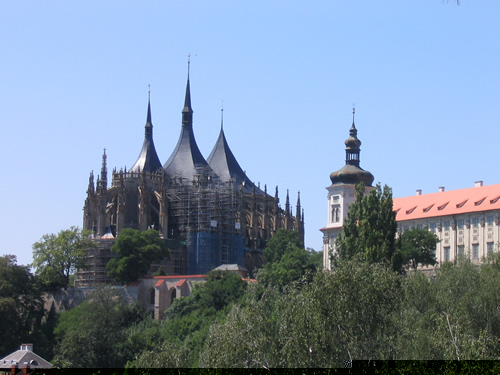
Another view of St. Barbara’s, including a charming view of the scaffolding:
Instead of the usual crucifix, the altarpiece is a painted bas-relief of the Last Supper, which is something I’ve never seen before, but which makes perfect sense.
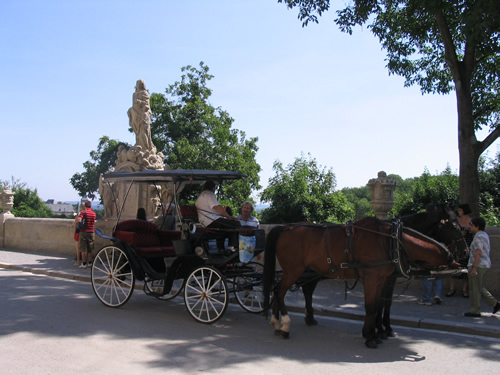
Horse-drawn carriages are a popular tourist fixture in Kutna Hora (in Prague as well):
The proximity of Kutna Hora to the silver mines led to the establishment of a Royal Mint. We toured the site of the mint, where coinmaking was demonstrated by a resident coinmaker:
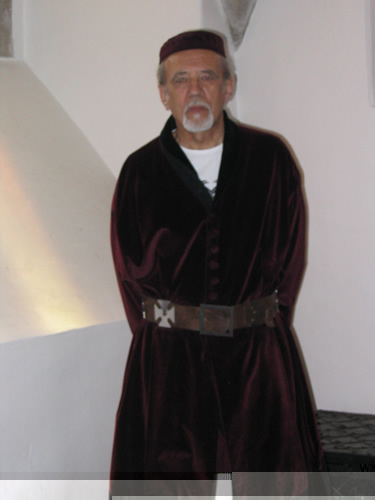
I had always thought that coins were molded, but instead (at Kutna Hora, at least) they were stamped.
We passed by a plague memorial:
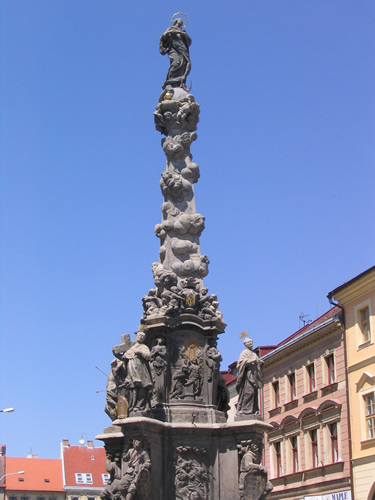
All in all, while Kutna Hora is a very pretty town, it didn’t really seem to be worth the trouble of the trip, and I’m not quite clear on why UNESCO has chosen to add it to its list of Heritage sites. Of course, I visited on a Sunday, when everything was shut down. I might have derived a more positive impression had it been livelier.
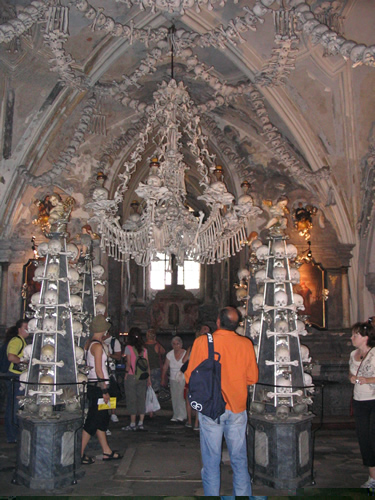
The tour included a trip to the Sedlec Ossuary, which was indeed worth the visit. The ossuary is home to something like 40,000 (!) human skeletons, which form some of the "decorations" for the chapel. This chandelier, for example:
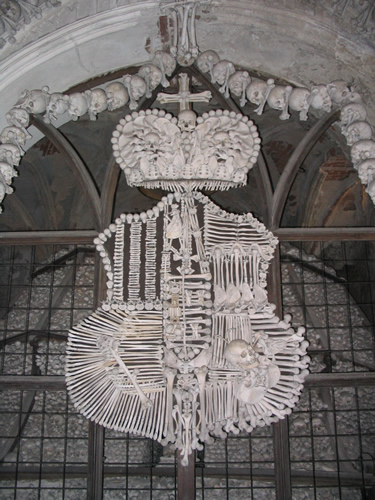
Or this coat of arms, for the Schwarzenberg family:
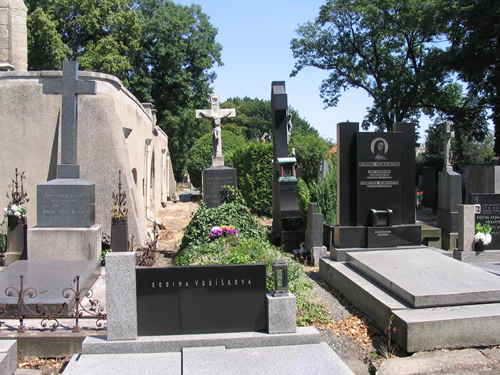
There’s also an unremarkable graveyard outside the chapel: